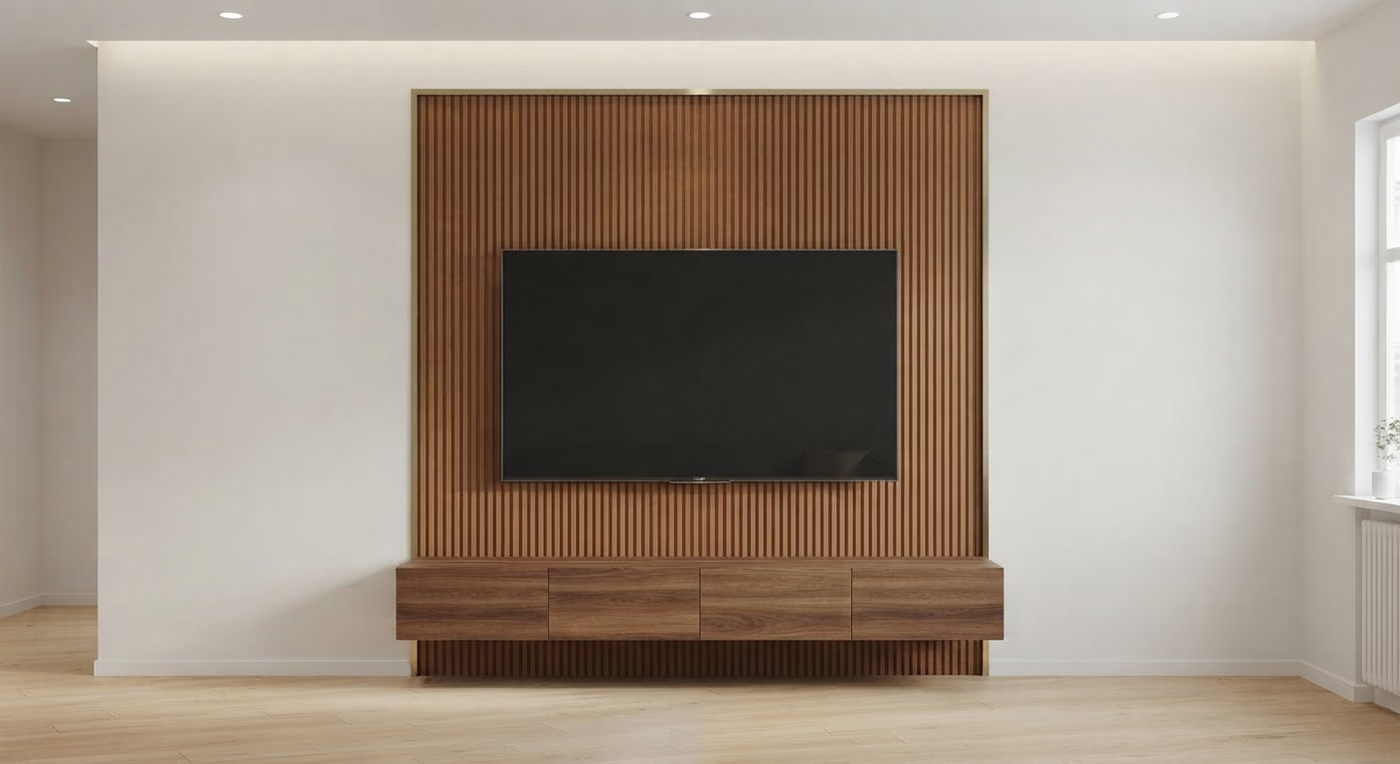
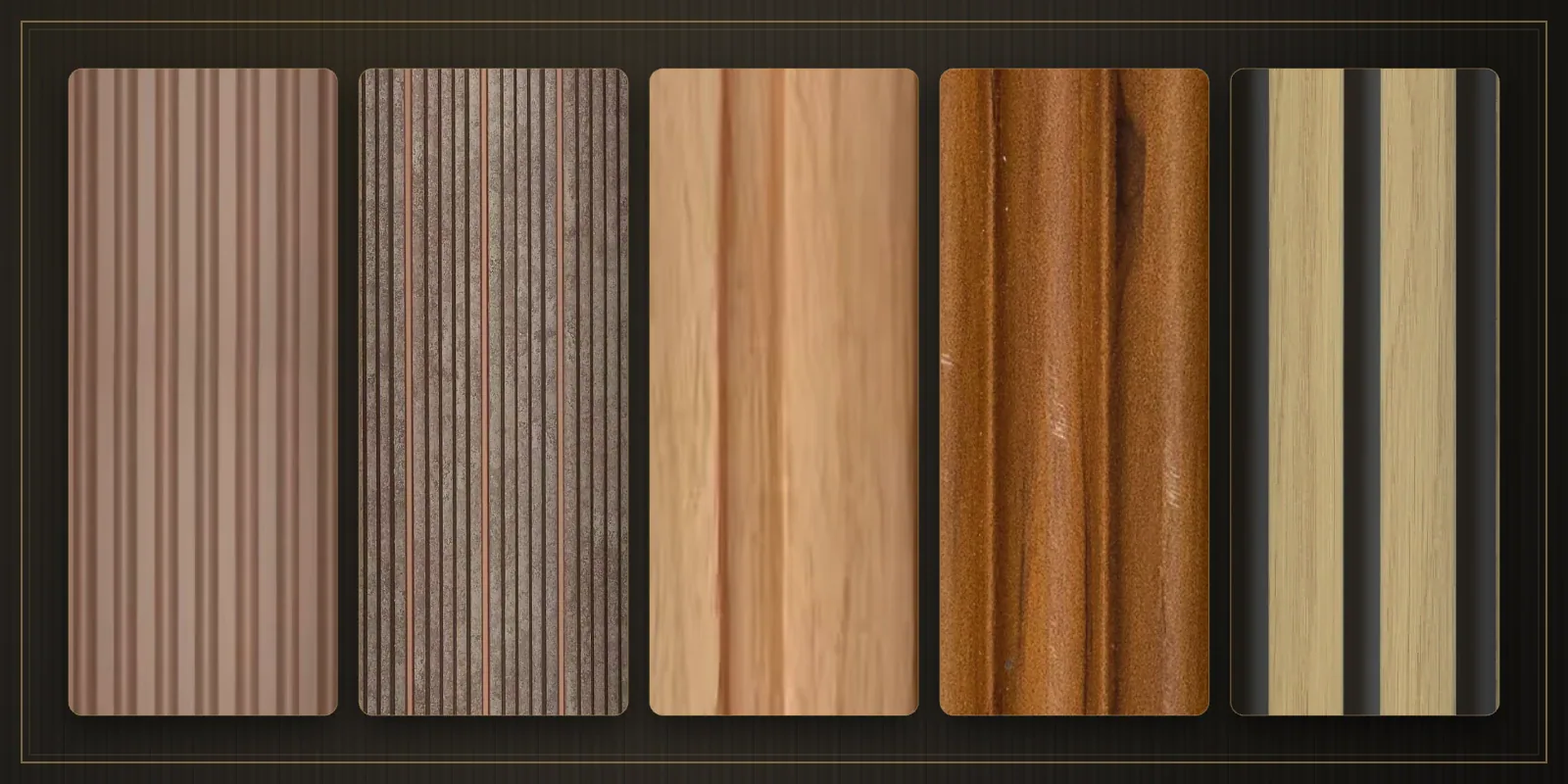
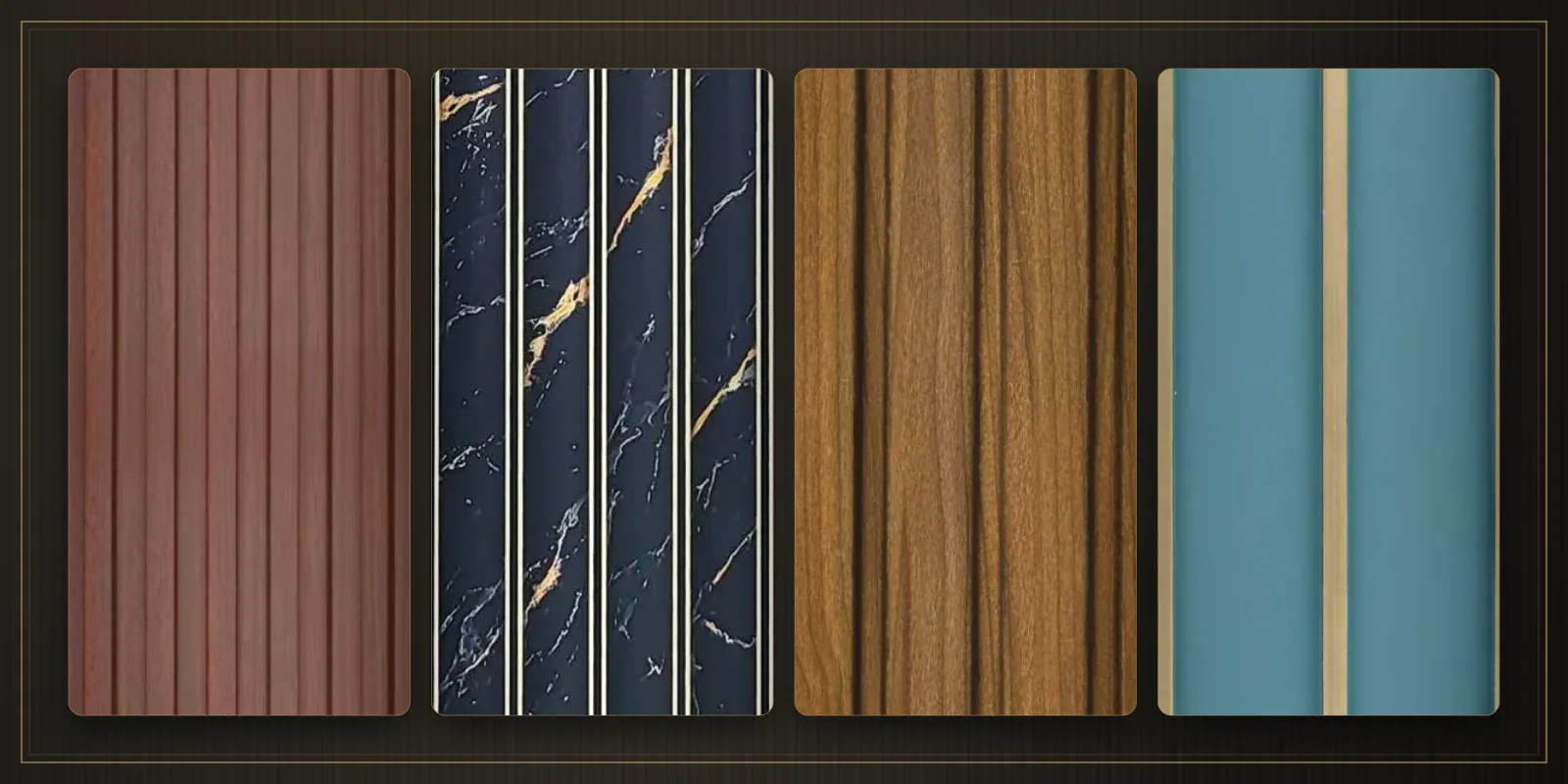
Monsoon damp, steamy bathrooms and kitchen splashes are the reasons many people move from wood and MDF to modern wall panels. But "water resistant" on a product listing can mean very different things.
This guide explains how WPC, charcoal and PVC panels actually handle water, which ones belong in which room, and the one thing no panel can fix: a damp wall behind it.
Quick answer: PVC panels are fully waterproof. WPC panels are highly moisture-resistant and termite-proof, so they suit bathrooms' dry zones, kitchens and humid rooms. All our wall panels are made for interior walls. Charcoal panels handle normal indoor humidity well but should be kept away from direct water such as shower spray or splashes behind a sink. No panel cures a damp wall: fix seepage first.
How each material handles water
| Feature | WPC | Charcoal | PVC |
|---|---|---|---|
| What it is | Wood fibre and polymer composite | Polymer composite with charcoal powder and a surface film | Rigid vinyl |
| Humidity | ✅ Very good | ✅ Good indoors | ✅ Excellent |
| Direct water or splashes | ⚠️ Handles occasional splashes | ❌ Keep away from spray and splashes | ✅ Fully waterproof |
| Termites | ✅ Resistant | ✅ Resistant | ✅ Resistant |
| Price per sq ft (our range) | ₹104 to ₹255 | ₹188 to ₹237 | About ₹100 (soffit ceiling panels) |

Room by room
| Room or area | Best choice | Notes |
|---|---|---|
| Bathroom, dry zone (behind the basin mirror, opposite the shower) | WPC | Keep panels out of the shower area itself |
| Bathroom, inside the shower | Tiles or stone | No decorative panel should take constant spray |
| Kitchen feature wall or breakfast counter | WPC | Wipes clean; keep away from the hob and sink splash zone |
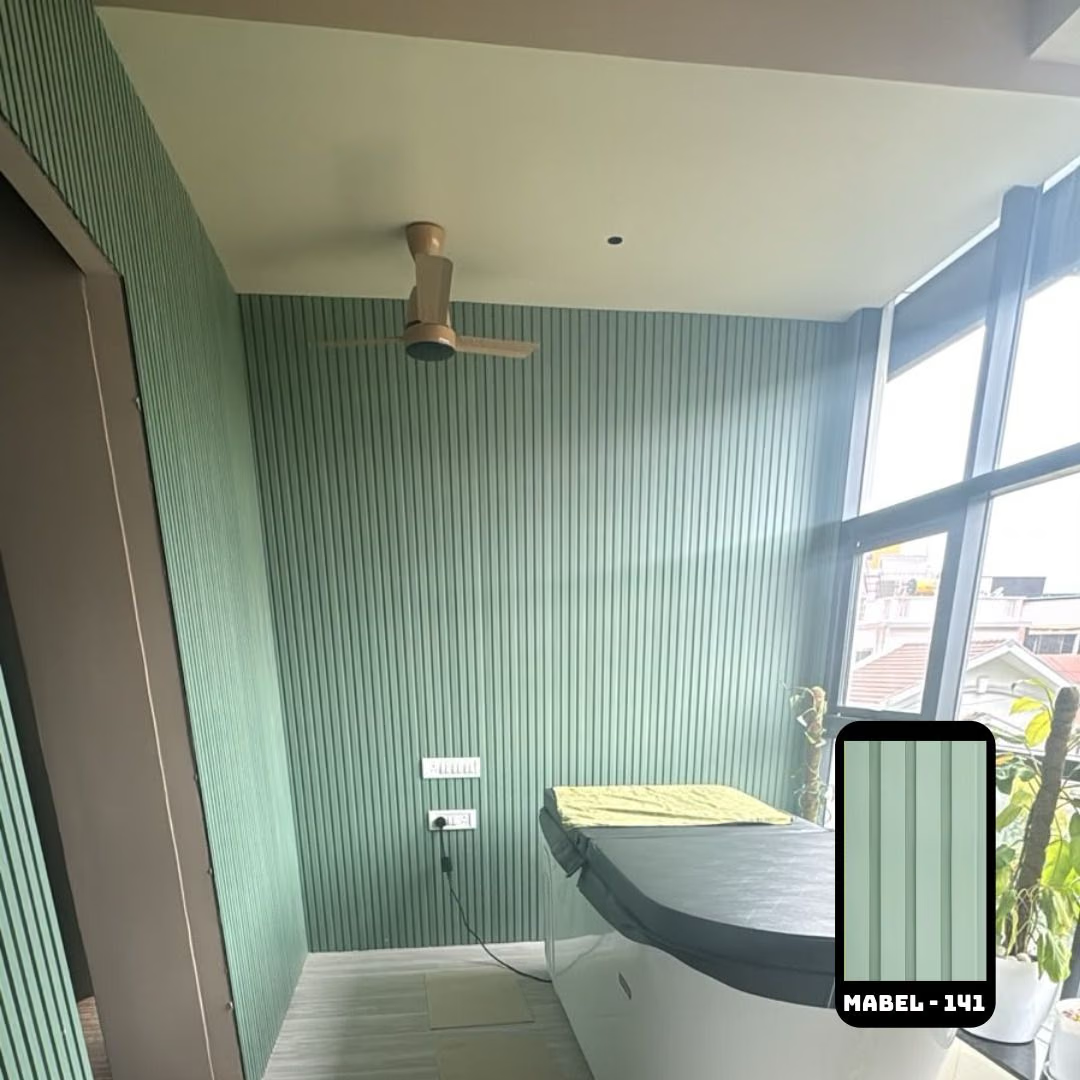
| Living room or bedroom in a humid city | WPC or charcoal | Both handle normal humidity well |
| Balcony wall, covered | WPC | Only where the wall is fully covered from rain and direct sun |
| Balcony or porch ceiling | PVC soffit panels | Fully waterproof and light; see PVC ceiling panels |
| Spa, gym, pool room | WPC | Good ventilation still matters |
The damp wall problem
Most panel failures blamed on water are really wall failures. If a wall has seepage from a leaking pipe, a bathroom on the other side or rain getting in, a panel will hide the stain for a while, but the damp stays, the adhesive can let go and mould can grow behind the panel. Before panelling, check for damp patches, peeling paint or a musty smell, find and fix the source, and let the wall dry. Panels are fixed to a flat, dry wall with silicone adhesive; a damp or uneven wall needs repair or a batten frame first.
Tips for panels in wet areas
- Leave the splash zone to tiles. Panel the walls around the shower or sink, not directly behind them.
- Seal the bottom edge. Keep the bottom of the panels a little above the floor where floors are mopped wet.
- Ventilate. An exhaust fan in a bathroom or kitchen protects panels, paint and everything else.
- Wipe, do not soak. Clean with a damp cloth, not a bucket of water. See how to clean and maintain wall panels.
Frequently Asked Questions
WPC is highly moisture-resistant and does not swell, rot or attract termites like wood. It suits humid rooms, kitchens and bathroom dry zones, but should not sit under constant shower spray.
They handle indoor humidity well and wipe clean, but should be kept away from direct water such as shower spray or splashes behind a sink. Use WPC or PVC there.
Yes, in the dry zones: behind the mirror, on the wall opposite the shower or above the wainscot line. Keep the shower area itself tiled.
Yes. PVC does not absorb water, which is why PVC soffit panels suit balcony and porch ceilings.
No. Panels hide stains but do not stop water. Fix the source of seepage and let the wall dry before installing any panel.
Not sure which panel suits your room?
Send us a photo of the wall and tell us what the room is used for, or see WPC, charcoal and PVC panels side by side at our Dommasandra showroom on Varthur Main Road, open Monday to Saturday, 10am to 6pm.
Planning your wall? Tap what you need and we will reply on WhatsApp:
- Get design help: send your wall size and a photo.
- Get a panel quote: prices and stock for the panels you like.
- Book a carpenter in Bangalore: our team installs the panels for you.
- Book a free consultation: a 1:1 with a designer at our Dommasandra showroom, or use our contact page.